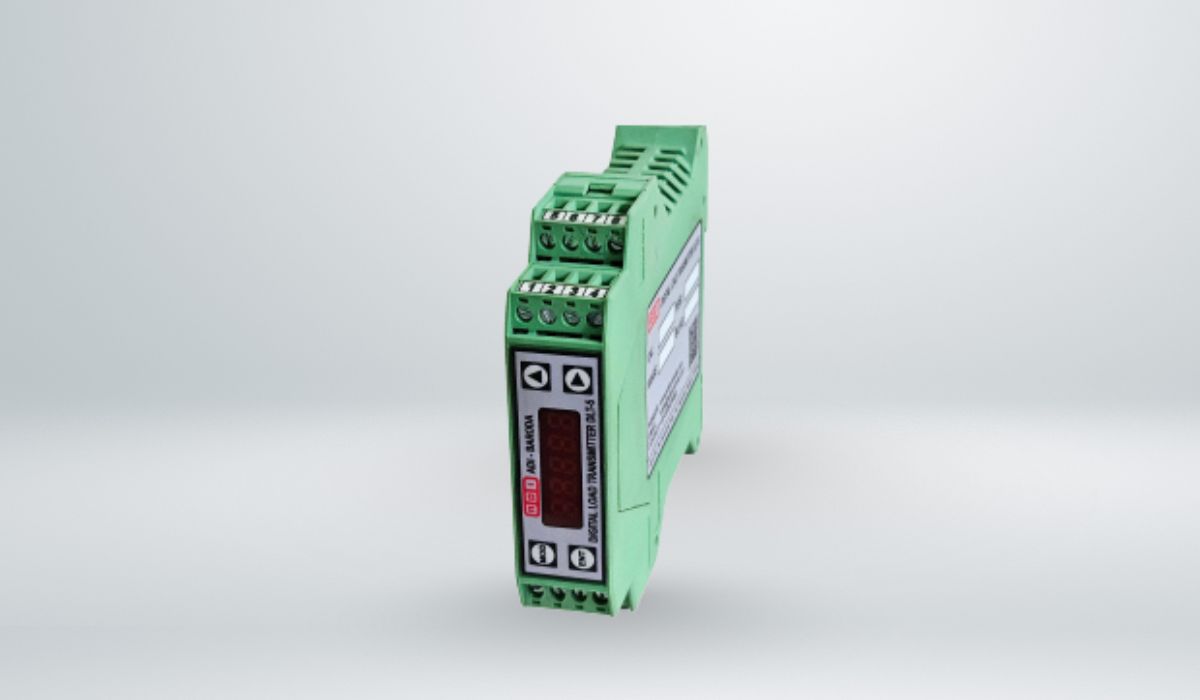
In industrial settings, precise measurement of force and weight is paramount. Whether you’re batching ingredients, filling silos, or testing the structural integrity of a component, the workhorse behind the measurement is the load cell.
However, the raw output from a load cell is often a tiny, delicate electrical signal measured in millivolts (mV). This signal is too weak, sensitive to noise, and non-standardized for direct use by industrial controllers. This is where the specialized device known as the Load Cell Transmitter (or Load Cell Amplifier/Signal Conditioner) comes into play.
A load cell transmitter is an electronic device that takes the low-level, differential analog voltage produced by a load cell’s strain gauge bridge and converts it into a robust, standardized, high-level electrical signal.
This conversion process is essential for two main reasons:
The transmitter’s role is to bridge the gap between the mechanical world of the load cell and the digital world of the control system.
A load cell requires a stable, regulated voltage, known as the excitation voltage, to power its internal Wheatstone bridge (strain gauges). The transmitter provides this power, often at 5V or 10V DC. Maintaining a stable and precise excitation voltage is critical, as any fluctuation here would introduce significant errors into the weight reading.
As force is applied, the load cell’s output changes by only a few millivolts per volt of excitation (e.g., 2 mV/V). The transmitter’s high-gain amplifier boosts this feeble signal significantly. At the same time, sophisticated filtering is applied to remove electrical noise and interference that the long wire run in an industrial plant would otherwise pick up.
This is the final, crucial step. The amplified and filtered signal is converted into a standard industrial output, making it universally compatible with control equipment:
Modern load cell transmitters are more than just simple amplifiers; they offer advanced features that streamline installation and maintenance:
The load cell transmitter is, therefore, the essential piece of hardware that transforms the subtle physical strain into the reliable, actionable data required for automated control and accurate business decisions.
WhatsApp us