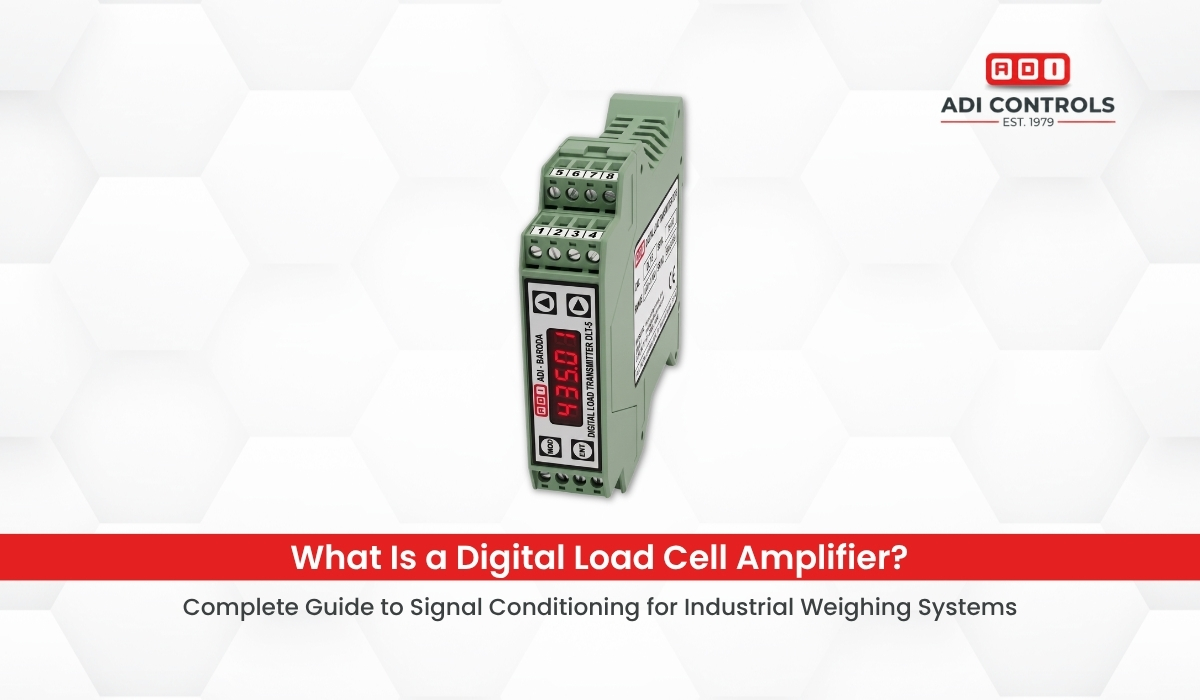
If you have ever tried to connect a load cell straight to a PLC, you already know the problem. The signal is far too weak to use on its own. This is exactly where a digital load cell amplifier comes in, and getting the right one can make or break your weighing system’s accuracy.
In this guide, we will break down what a digital load cell amplifier does, how it differs from a controller, and what to check before you buy one. No confusing jargon, just the essentials.
A digital load cell amplifier takes the tiny electrical signal from a load cell and boosts it into something your control system can read. Raw load cell output is measured in millivolts, too small and too noisy for most industrial equipment to use directly.
The amplifier steps in, cleans up that signal, and converts it into a stronger, stable output. This is usually a standard 4-20mA or 0-10V signal, or sometimes a digital output like RS-485. As a result, your PLC or SCADA system receives clean, reliable data instead of a weak, fluctuating one.
ADI Controls’ DLT-4 digital load cell amplifier handles this signal-conditioning role in compact industrial panels.
This is where a lot of buyers get confused, so let’s clear it up quickly.
A digital load cell amplifier only conditions and transmits the signal. It does not usually have a display or built-in control logic. A controller, on the other hand, adds a screen, set points, and relay outputs on top of that same signal conditioning.
Think of the amplifier as the messenger and the controller as the messenger plus the decision-maker. If you already have a PLC handling the logic, an amplifier alone is often all you need. If you need standalone control, our digital load cell controller guide covers that in more depth.
You will typically need a digital load cell amplifier when:
• You are connecting a load cell directly to a PLC or industrial controller
• Your cable runs are long, and the raw signal keeps losing strength or picking up noise
• You are upgrading an older analog weighing setup to something more stable
• You need a compact, panel-mounted solution rather than a full indicator with a display
If any of these sound familiar, an amplifier is probably the missing piece in your setup.
Choosing the right amplifier does not have to be complicated. Focus on these basics first:
• Compatibility with your existing load cell type and capacity
• Output type your system actually needs, whether analog or digital
• Build quality, since factory floors are tough on electronics
• Ease of installation, especially if you are retrofitting an existing panel
Getting these four right will cover most industrial applications without overthinking the specs.
Because signal conditioning is such a fundamental need, digital load cell amplifiers show up across many sectors. Some of the most common include:
• Packaging and check-weighing lines
• Material testing setups, such as UTM machines
Anywhere a load cell needs to talk to a PLC, an amplifier is likely doing the work behind the scenes.
Instead of guessing at specifications, it is usually faster and safer to talk directly with the manufacturer about your application. This helps you avoid buying something that is either overkill or underpowered for your setup. ADI Controls also offers custom solutions if your application needs a specific configuration.
A digital load cell amplifier is a small component, but it directly affects your weighing accuracy. If you are planning an upgrade or a new installation, get in touch with ADI Controls and we will help you find the right fit for your system.
An amplifier only conditions and transmits the signal, while a controller adds a display and control logic on top of that.
In most cases, yes, as long as the input sensitivity and excitation voltage match. It is always worth confirming compatibility with the manufacturer first.
WhatsApp us