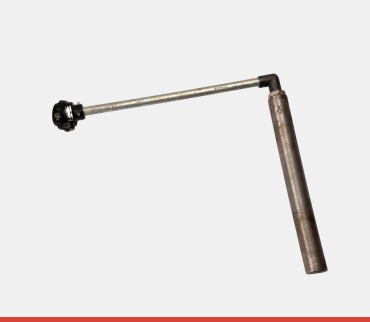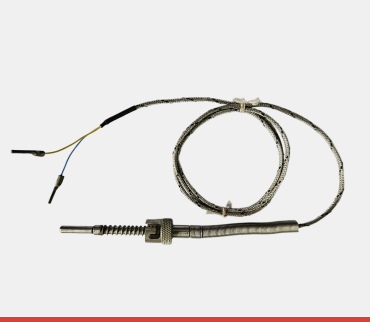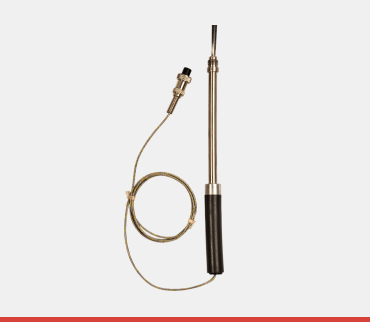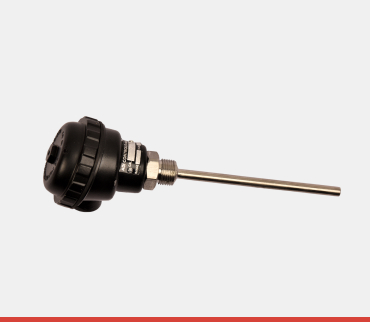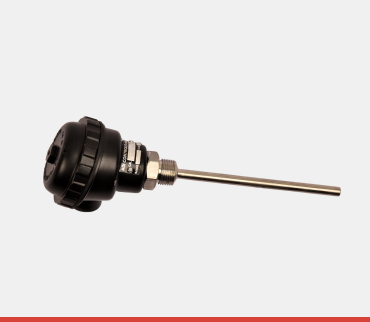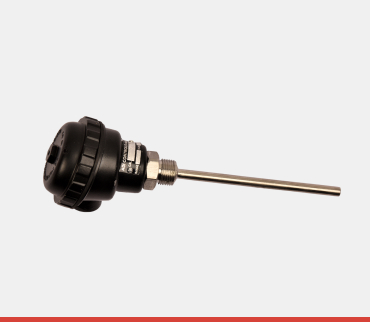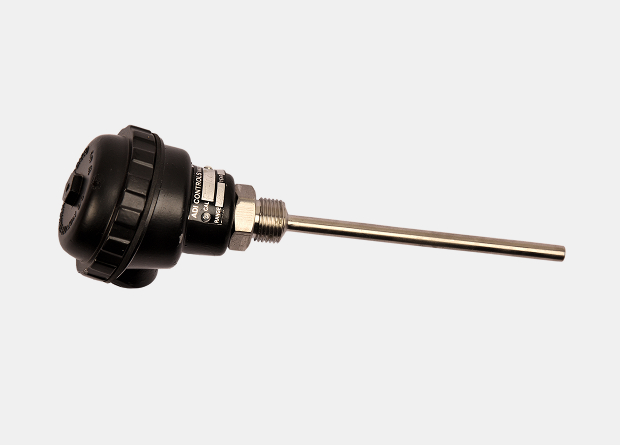
A Thermocouple with a SS316 Sheath and Aluminium Head is a highly durable and widely used industrial temperature sensor assembly designed for processes requiring superior corrosion resistance.
It is an upgrade from the common SS304 sheath, making it suitable for harsher chemical environments.
1. Thermocouple Element
• Function: This is the core element (e.g., Type K, J, or T wires) that measures heat energy and converts it into a small, measurable millivolt ($\text{mV}$) signal.
2. SS316 Sheath
• Material: Stainless Steel Grade 316 (SS316). This is a premium grade of stainless-steel containing molybdenum, which is the key difference from SS304.
• Function: The sheath acts as a protective barrier for the sensitive internal wiring and insulation.
• Key Advantage: The addition of molybdenum significantly enhances its resistance to corrosion, particularly against pitting corrosion and corrosion caused by chlorides, acids, and brine solutions.
• Applications: It is preferred in the marine, food and beverage, pharmaceutical, and chemical industries where the sensor may be exposed to aggressive cleaning agents, saltwater, or mild acids.
3. Aluminium Head
• Design: This is the connection head (or terminal head) at the non-measuring end of the sensor. It is an enclosed housing.
Product Type
Single Point Aluminium Load Cell
Usage
Table top scales, Counting and postal scales, Check weighers.
Material
Aluminium
Output
Analog Sensor
Theory
Resistance Sensor
Compensated Temperature
10 To 60 Celsius (oC)
Rated capacity (NM)
5, 10
Excitation Voltage
10 V DC – Maximum 15 V DC
Full Scale Output
2.0 mV / V
Non – Linearity
<± 0. 1 % FSO (Full scale Output)
Hysteresis
<± 0.1% FSO
Non-Repeatability
<± 0.1 % FS0
Creep error (30 minutes)
<± 0.3% FSO
Zero Output
± 1.0 % FSO
Input Resistance
392 ± 10 Ohms
Output Resistance
392 ± 10 Ohms
Insulation Resistance
>1000 Mega Ohms
Safe Overload
150 % of Rated Capacity
Ultimate Overload
250 % of Rated Capacity
Temperature
Compensated Range
10 to 60°C
Temperature Effect at Full Load
<0.05 % FSO/° C
Temperature Effect on
Zero
<0.05 % FSO/° C
Environment Protection
IP 65
Finish & Construction
Stain Less Steel 17-4 PH
Rotational Angular Deflection
< 0.2 at FSO
A temperature sensor is a device that gathers information about the thermal energy (heat) of a medium and converts that information into a readable electrical signal. Essentially, it measures heat and outputs a corresponding signal (voltage, current, or resistance) that can be interpreted by a control system or thermometer.
The three most widely used types of temperature sensors are:
The temperature reading needs to be converted into an electrical signal (like a voltage or current) so it can be:
Temperature sensing is foundational to industrial control and everyday technology:
WhatsApp us