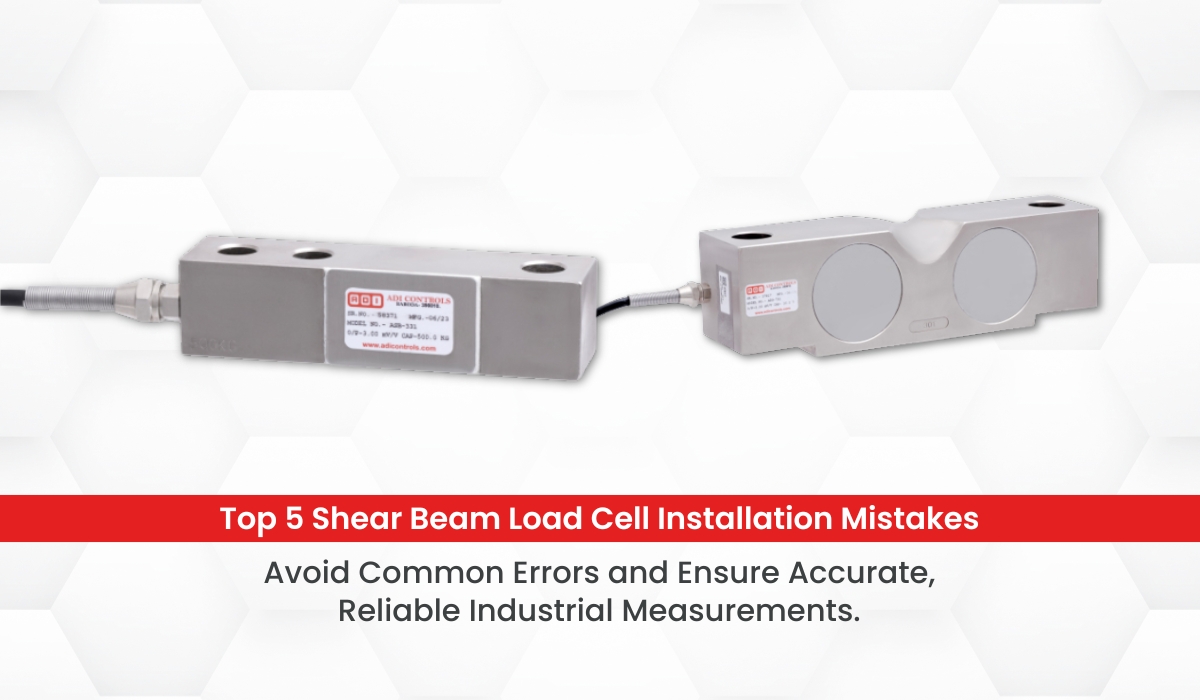
A shear beam load cell is one of the most widely used sensors in industrial weighing applications. You find them in floor scales, conveyor systems, tank weighing setups, and agricultural hoppers. They are reliable, compact, and cost-effective. But even the best sensor can underperform when installation is done carelessly.
This guide walks you through five critical installation mistakes that engineers commonly make. More importantly, it tells you exactly how to avoid them.
The mounting surface matters more than most engineers realize. A shear beam load cell relies on even load distribution. If the surface is uneven, corroded, or not properly machined, the cell experiences side loading or torsion. This distorts the signal and reduces accuracy.
How to avoid it:
Always machine or inspect the mounting surface before installation.
The surface must be flat, clean, and free of paint or rust.
Use a torque wrench when tightening mounting bolts. Follow the manufacturer’s specifications.
Not all shear beam load cells work the same way in every setup. Engineers sometimes install a single-ended shear beam load cell where a double-ended shear beam type load cell is actually required, or the other way around. This mismatch causes structural stress and measurement errors.
How to avoid it:
A single-ended shear beam load cell suits low-capacity applications where one end is fixed.
A double-ended shear beam type load cell handles larger loads and provides more stable support on both ends.
Always match the load cell geometry to the structural design of the weighing system.
Consult the datasheet and verify the rated capacity before proceeding.
Cables carry the electrical signal from the load cell to the display or controller. Poor cable routing exposes them to mechanical damage, moisture, and electromagnetic interference. This leads to erratic readings and frequent maintenance issues.
How to avoid it:
Route cables away from heat sources, moving parts, and sharp edges.
Use conduit or cable trays in industrial environments.
Keep signal cables separate from power cables to reduce interference.
When using digital load cells, follow the specific wiring protocol provided by the manufacturer.
Many engineers complete the physical installation and assume the system is ready to use. Skipping the zero-load test is a costly mistake. Structural preloads, mounting stress, or improper alignment can all introduce an offset error that affects every reading afterward.
How to avoid it:
After installation, power up the system and check the zero output without any load applied.
The reading should fall within the specified zero balance tolerance from the datasheet.
If the offset is outside the range, recheck the mounting, cable connections, and alignment.
For digital load cells, use the built-in diagnostics to verify zero calibration.
A shear beam load cell is an electrical and mechanical instrument. Temperature swings, moisture, dust, and vibration all affect its performance. Engineers who ignore the operating environment end up with sensors that drift, fail prematurely, or give inconsistent readings.
How to avoid it:
Select a load cell with an IP rating appropriate for your environment. Outdoor and wet areas need at least IP67.
In environments with strong vibration, use vibration-damping mounts.
Account for thermal expansion in the mechanical design, especially in outdoor or foundry settings.
For harsh conditions, digital load cells with onboard temperature compensation offer better long-term stability.
A shear beam load cell is a precision instrument. Its performance depends heavily on how it is installed. By avoiding these five common mistakes, you protect your investment, improve measurement accuracy, and reduce long-term maintenance costs. Whether you are setting up a simple platform scale or a complex multi-cell system, these principles apply across the board.
When in doubt, always refer to the manufacturer guidelines or consult a specialist who understands shear beam load cell working principles in depth. With years of expertise, ADI helps engineers maximize the reliability and accuracy of their shear beam load cell installations, ensuring optimal performance in every application.
It measures weight in industrial applications like floor scales, tanks, and hoppers.
Single ended cells fix one end for light loads, while double ended cells support both ends for larger, stable loads.
Proper routing prevents interference, damage, and erratic readings.
It verifies the load cell reads zero before use, ensuring accuracy.
Temperature, moisture, dust, and vibration can cause drift or premature failure.
WhatsApp us