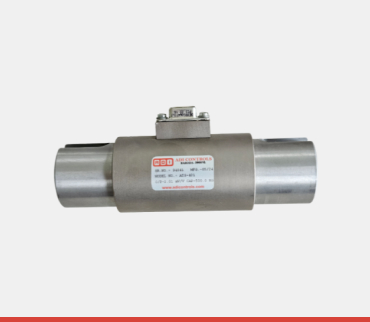
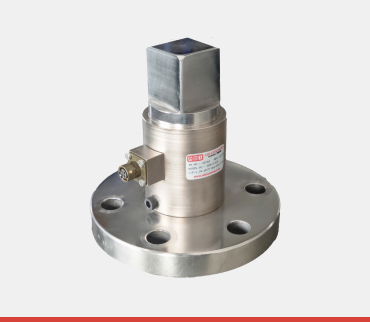
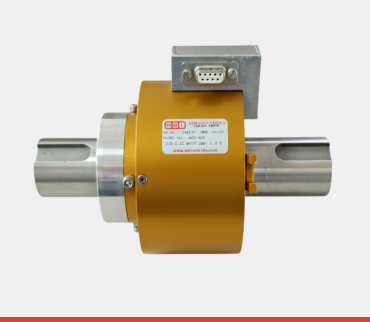
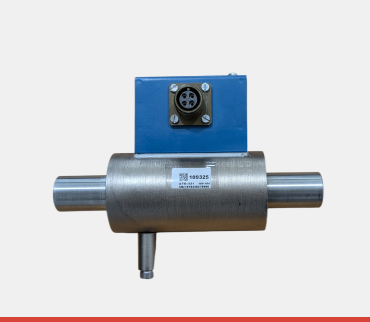
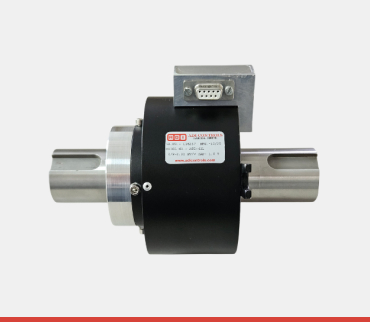
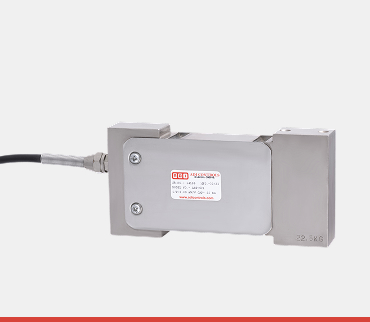
In the context of electric motor testing and manufacturing, load cells and weighing instruments are crucial for ensuring quality, efficiency, and compliance. The primary application is measuring the torque (rotational force) produced by the motor, which is necessary to calculate its power output and efficiency under various load conditions. To achieve this, the motor is connected to a dynamometer (or dyno). Within the dyno setup, a specialized Torque Transducer (a type of strain-gauge based load cell designed to measure twisting force) is often integrated directly into the drive shaft between the motor and the load absorber. Alternatively, a standard S-Beam Load Cell or Compression Load Cell may be mounted on a reaction arm (torque arm) attached to the motor’s housing or the dynamometer itself; this cell measures the tangential reaction force, which is then multiplied by the arm’s length to precisely calculate the motor’s torque. The signal from the load cell is processed by a high-speed Torque/Force Indicator or Data Acquisition System (DAS) that also takes inputs from speed sensors to simultaneously calculate and log power HP or kW, efficiency, and other performance metrics, ensuring the motor meets its operational specifications.
They help measure torque, load, and mechanical stress during motor performance evaluation.
Precise measurement ensures motors operate efficiently without overheating or mechanical failure.
They are used in assembly stations, endurance testing, and quality inspection setups.
Yes, they are designed to deliver stable and reliable readings under dynamic and high-speed conditions.
WhatsApp us