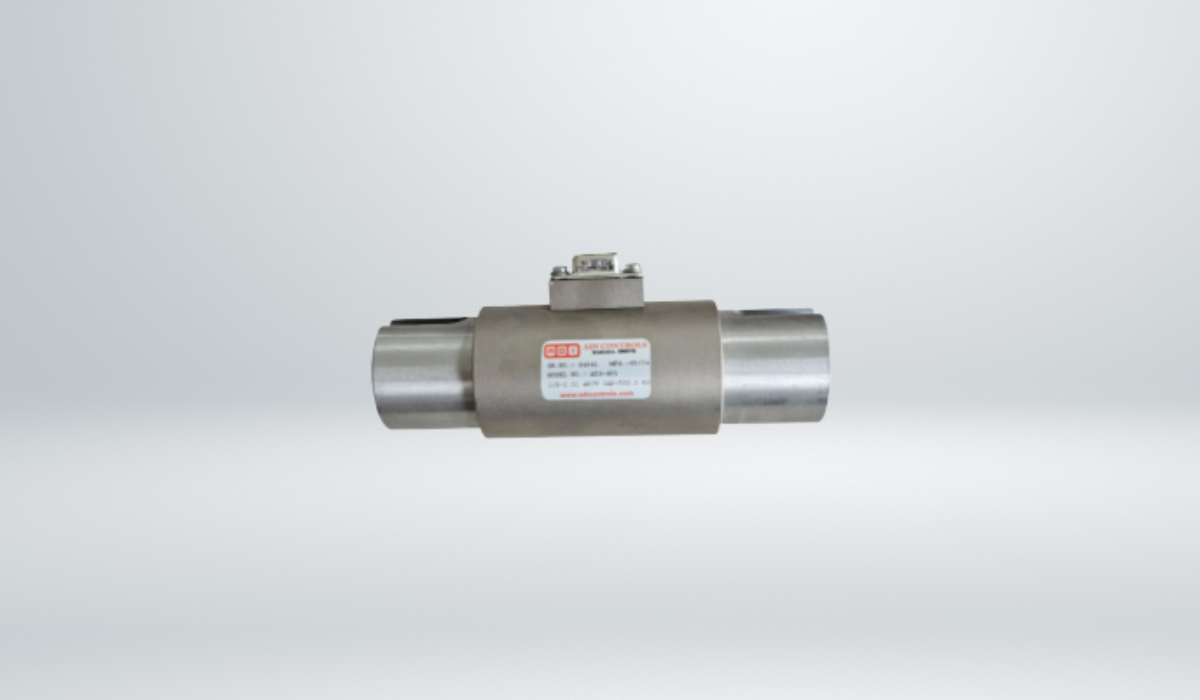
In industrial environments where precision matters, torque measurement is more than a technical parameter. It determines product quality, equipment reliability, and operational safety. From motor testing and gearbox validation to valve calibration and structural performance analysis, accurate torque data ensures systems perform as intended.
At the heart of reliable static torque measurement lies material science. Among the various alloys used in torque transducer manufacturing, high-grade 17-4 PH stainless steel has emerged as the industry benchmark. Its unique mechanical properties make it exceptionally suited for precise and stable torque sensing applications.
To understand why material selection matters, it is important to first understand how to measure torque in static conditions.
Static torque measurement refers to measuring rotational force applied to a stationary or slow-moving shaft. In such applications, torque is applied gradually and held steady for calibration, validation, or testing. The torque transducer senses the twist created in the shaft and converts that mechanical deformation into an electrical signal through strain gauges.
The accuracy of torque measurement depends heavily on how predictably the shaft material behaves under load. Any inconsistency in deformation, fatigue, or structural instability directly affects measurement reliability
In torque transducers, the shaft experiences torsional stress. The material must:
If the material lacks strength or dimensional stability, it can introduce hysteresis errors, signal drift, or long-term inaccuracy. This is precisely why 17-4 PH stainless steel has become the preferred choice.
17-4 PH stainless steel is a precipitation-hardening martensitic stainless steel known for its high strength, excellent corrosion resistance, and superior mechanical stability.
Key characteristics include:
Unlike conventional stainless steels, 17-4 PH can be heat-treated to achieve different strength levels while maintaining structural integrity. This flexibility allows torque transducer manufacturers to optimize the material for specific measurement ranges.
17-4 PH stainless steel offers:
Modern torque transducers designed for static torque measurement frequently use 17-4 PH stainless steel in the sensing shaft. This material ensures:
For example, in motor testing applications, precise torque measurement helps engineers evaluate performance efficiency. In valve manufacturing, static torque measurement ensures consistent tightening and safety compliance. In structural testing labs, accurate torque measurement validates design strength.
High-grade torque transducers, such as those engineered by ADI Controls, incorporate advanced strain gauge technology combined with robust material selection to deliver reliable and repeatable results across industrial applications.
Material science determines the long-term reliability of torque sensing systems. 17-4 PH stainless steel offers a rare balance of strength, fatigue resistance, corrosion protection, and elastic predictability. These characteristics make it uniquely suited for static torque measurement applications.
In precision-driven industries, even minor measurement errors can have significant consequences. By using high-grade 17-4 PH stainless steel in torque transducer manufacturing, engineers ensure durability, consistency, and dependable torque measurement performance.
Choosing the right material is fundamental to achieving accurate torque measurement. High-grade 17-4 PH stainless steel provides the strength, stability, and durability required for precise static torque sensing. When integrated into a well-engineered torque transducer, it ensures reliable data, long service life, and consistent industrial performance.
For industries where how to measure torque accurately defines operational success, the combination of advanced sensor design and premium-grade materials makes all the difference.
ADI Controls offers precision-engineered torque transducers designed for accurate and reliable torque measurement in industrial applications. Built with high-grade materials and advanced sensing technology, their solutions ensure stable performance, durability, and consistent results. From motor testing to calibration and validation, ADI Controls provides dependable torque measurement systems that support operational accuracy, safety, and long-term reliability across demanding environments.
WhatsApp us