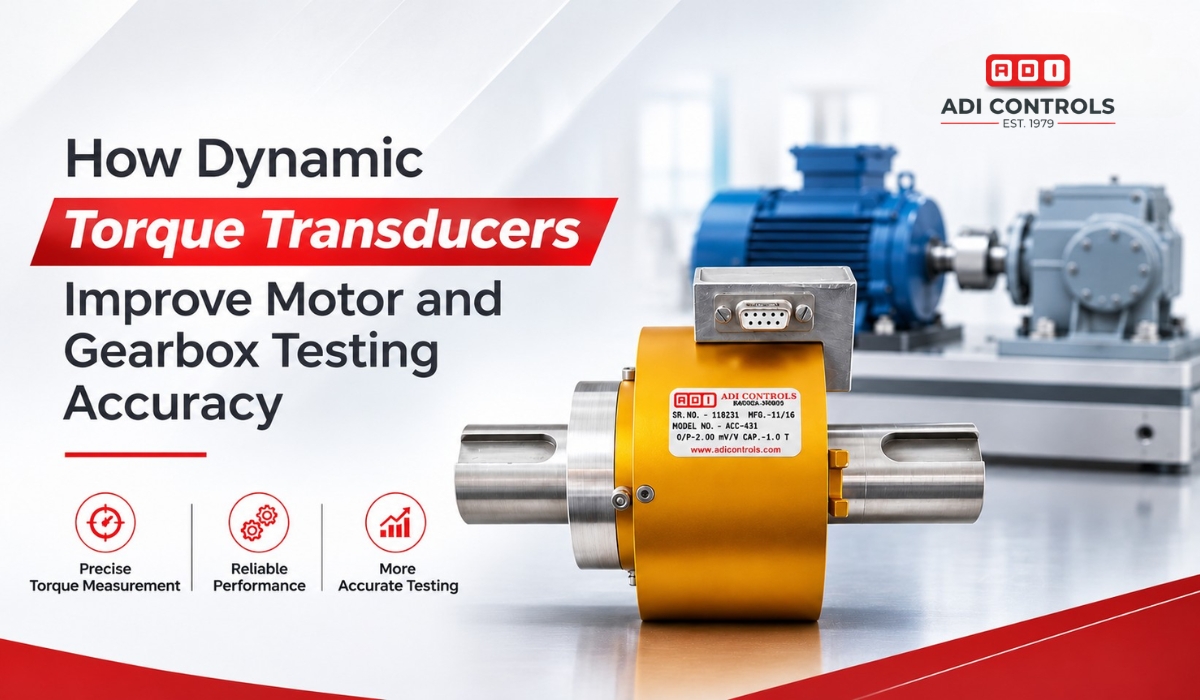
A motor that passes its nameplate test can still fail in the field. Torque ripple, a worn coupling, or a gearbox that loses efficiency under load often stays hidden during static checks.
A dynamic torque transducer measures torque while the shaft is turning, so test engineers see how a drive behaves in real operating conditions. In our experience with motor test benches and gearbox end-of-line rigs, the improvement in data quality after moving from a reaction torque arm to an inline rotary sensor is visible from the very first run.
A torque transducer converts twisting force into an electrical signal. A static, or reaction, type measures torque on a fixed mount. A dynamic torque transducer is fitted inline between the driver and the load, and it rotates with the shaft.
Strain gauges bonded to the shaft form a Wheatstone bridge. As torque twists the shaft by a very small angle, the bridge output changes in proportion. Because the sensing element rotates, the signal reaches the stationary housing through non-contact transmission such as inductive coupling or telemetry. Many units also carry a speed sensor, so torque, RPM, and power are recorded together.
Efficiency testing of electric motors
Motor efficiency is mechanical output power divided by electrical input power. Mechanical power is torque multiplied by speed. So a 1 percent torque error becomes a 1 percent efficiency error, which can push a good IE3 motor below its class limit on paper. Measuring directly on the shaft removes errors from bearing friction and reaction arm geometry.
Gearbox efficiency and backlash checks
Measuring torque on both the input and output shafts gives true gearbox efficiency under load. Dynamic readings also reveal backlash and poor tooth mesh as repeating spikes in the torque trace. A static setup tends to average these details away.
Torque ripple and transient events
Startup surges, stall torque and sudden load steps happen within milliseconds. A dynamic sensor paired with a fast data acquisition system captures these peaks. Cogging torque in permanent magnet motors and vibration from misalignment also show up clearly in the waveform.
On most test benches, the gains come from four practical changes:
Not every sensor suits every bench. When comparing torque transducer manufacturers, ask about rated capacity and overload limit, maximum speed and signal output. Ask about calibration and repair support too. Local manufacturing shortens lead times for custom shaft sizes and makes service far simpler.
ADI Controls has designed and built measurement sensors in Vadodara for over four decades. The ATD-432 dynamic torque transducer uses non-contact signal transmission for maintenance free running on motor, engine and actuator test rigs. See how it fits into electric motor testing setups, or talk to our engineers about your capacity and speed requirements.
A static torque transducer measures reaction torque on a fixed, non-rotating mount. A dynamic torque transducer sits inline and rotates with the shaft, measuring torque during operation. Dynamic types suit motor, engine and gearbox testing where real running data matters.
Strain gauges on the shaft produce a signal that must pass from the rotating part to the fixed housing. Modern designs use non-contact methods such as inductive coupling or telemetry. Older designs use slip rings, which wear out and add noise.
Motor efficiency depends on mechanical output power, which equals torque multiplied by speed. Any torque error passes straight into the efficiency result. Accurate inline torque data helps manufacturers verify efficiency class, compare designs and reject faulty units before dispatch.
Choose a rated capacity where normal test torque falls between 50 and 80 percent of full scale. Make sure peak torque during start up or stall stays within the safe overload limit. Also confirm maximum speed, shaft or flange type and output signal.
Look for proven experience with strain gauge sensors, traceable calibration, custom shaft and capacity options and dependable after sales support. A manufacturer with local production can deliver faster, handle repairs quickly and help you integrate the sensor with your existing test bench.
WhatsApp us