Industrial lifting is a high stakes operation. A single measurement error or equipment failure can cause injury, property damage, or production downtime. That is why choosing the right crane load cell is not just a procurement decision. It is a safety decision.
This guide covers what crane load cells are, the different types available, what specifications to look for, and how to identify reliable manufacturers. Whether you need a standard off the shelf unit or a fully custom load cell solution, this guide has you covered.
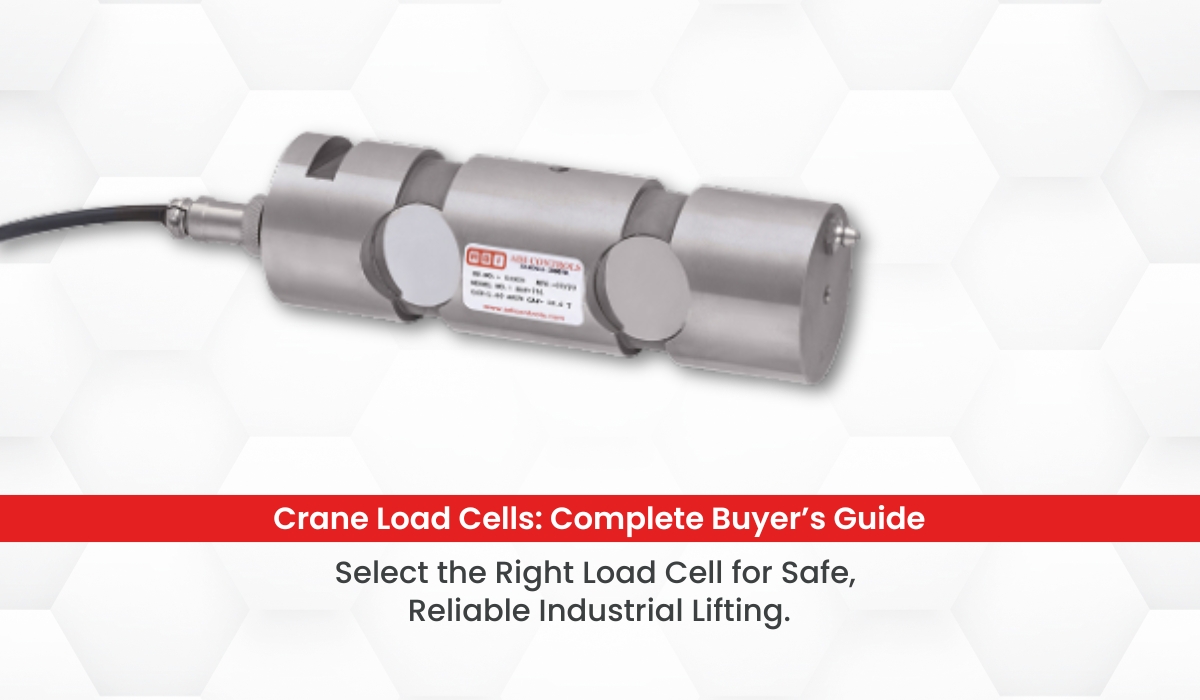
A crane load cell is a force measurement device used in lifting systems to monitor and display the weight of a suspended load. It measures tension or compression in real time. This data is critical for load control, overload prevention, and compliance with safety regulations.
Crane load cells are used across shipyards, steel mills, construction sites, paper mills, and material handling facilities. They help operators stay within the safe working load of their equipment at all times.
The working principle is based on strain gauge technology. When a force is applied to the pin, the internal material deforms slightly. The strain gauges bonded inside the pin detect this deformation and convert it into an electrical signal.
This signal is then processed by a signal conditioner or a digital load cell indicator to display the force in real time. Modern systems often connect to a digital load cell display or a PLC for continuous monitoring and data logging.
The output is typically an analog millivolt per volt signal. Some advanced models also offer digital output formats for direct integration with automation systems.
These load cells are installed in the lifting line itself, between the crane hook and the rigging. They provide continuous load monitoring throughout the lift cycle. They are commonly used in overhead cranes and gantry systems.
Digital load cells transmit data via wired or wireless communication. They are increasingly preferred in modern facilities because they eliminate signal cable complications and offer real time data logging. Wireless models allow operators to monitor loads from a safe distance.
When comparing products from different crane load cell manufacturers, focus on these specifications:
Standard crane load cells cover most industrial scenarios. But certain applications require a custom load cell build. This is often the case when:
Working with a manufacturer who offers custom load cell capabilities gives you the flexibility to solve application challenges without compromising on accuracy or safety.
Always verify the load cell is rated for the working load before installation.
Use certified rigging hardware and follow lifting equipment regulations in your region.
Inspect the load cell visually before each use in demanding or high cycle environments.
Recalibrate at regular intervals or after any impact, overload event, or repair.
For digital load cells, back up configuration data and keep firmware updated.
Store unused crane hook load cells in a clean, dry environment to prevent seal degradation.
A crane load cell is a long term investment in safety, compliance, and productivity. Taking the time to understand your application requirements, compare crane load cell manufacturers, and evaluate options like crane hook load cells or digital load cells will result in a better purchase decision.
When standard options are not enough, exploring a custom load cell solution ensures your system performs exactly as required. Do not rush the selection process. The right load cell protects your people, your equipment, and your operation.
With extensive experience in industrial lifting solutions, ADI helps engineers and operators choose the right crane load cells to ensure safe, reliable, and accurate performance in every lift.
It measures the weight of suspended loads in real time for safe lifting operations.
A load cell that attaches directly to the crane hook to monitor weight during lifts.
They provide real-time monitoring, remote access, and reduce wiring complications.
Custom cells are needed for unusual capacities, special mounting, or harsh environments.
Regular inspections and recalibration are required after overloads, impacts, or at scheduled intervals.
WhatsApp us