APM-961

Pan Cake Load Cell

Home / Products / Load Cells / APM-961

APM-961

Pan Cake Load Cell

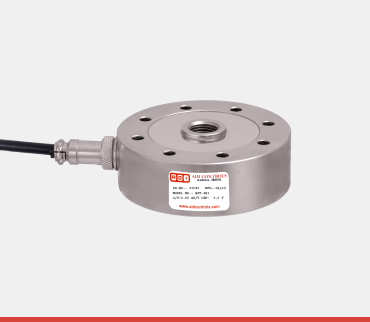
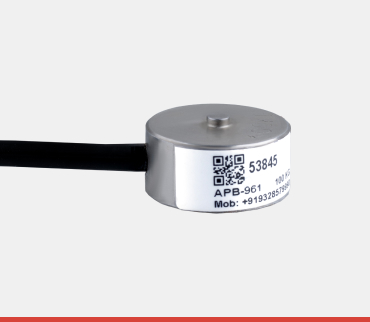
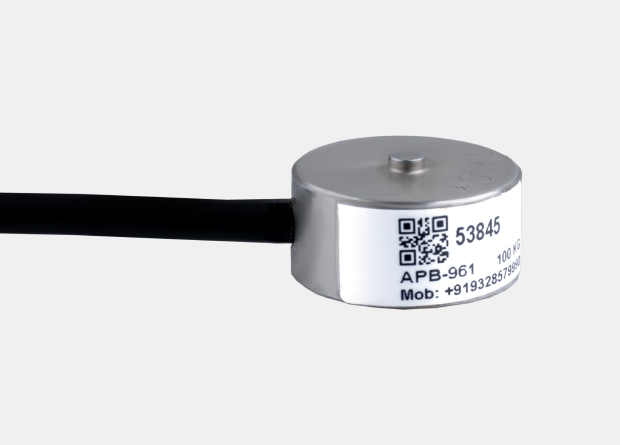
ADI APM-961 miniature pancake load cell (also known as a Universal Load Cell or Shear Web Load Cell) is a high-precision force transducer distinguished by its flat, low-profile, and circular or disc shape, resembling a pancake. Its low-profile and round design allows it to be installed in environments with limited space or height constraints. It is highly versatile, designed for measuring forces in both tension (pulling) and compression (pushing). The structure typically features a central threaded hole for applying the load and multiple mounting holes on the outer ring for securing it to a surface. The internal element often consists of multiple shear webs or spokes arranged symmetrically. A key advantage is its high resistance to off-axis loading (side forces or bending moments), making it exceptionally accurate and reliable even when the load is not perfectly centered. It is also known as model 90610

Product Type

Single Point Aluminium Load Cell

Usage

Table top scales, Counting and postal scales, Check weighers.

Material

Aluminium

Output

 Analog Sensor

Theory

Resistance Sensor

Compensated Temperature

10 To 60 Celsius (oC)

Rated capacity (Kgf)

100, 220, 500 Kgf

Excitation Voltage

10VDC-Maximum 15 VDC

Full Scale Output

2.0 mV/V

Non – Linearity

<± 0. 5 % FSO (Full scale Output)

Hysteresis

<± 0. 3 % FS0

Non-Repeatability

<± 0.1 % FS0

Creep error (30 minutes)

<+ 0.03 % FS0

Zero Load Output

± 1 .0 % FSO

Input Resistance

380 ± 10 Ohms

Output Resistance

350 Ohms

Insulation Resistance

>1000 Mega Ohms

Safe Overload

150 % of Rated Capacity

Ultimate Overload

250 % of Rated Capacity

Temperature
Compensated Range

10 to 60° C

Temperature Effect at Full Load

<0.005 % FSO/ °C

Temperature Effect at Zero Load

<0.005 % FSO/ °C

Side Load Allowed

50 % of Rated Capacity

Deflection

< 0.4 mm at FSO

Finish & Construction

Stain Less Steel 17-4 PH

Environment Protection

IP 65

Industries

Automation Application
Automotive Industries
UTM Machines
ROBOTICS
Tablet Compression Testing
Structural Load Testing
Industrial Presses
Defence Industries

Related Products

FAQs

frequently asked questions

01. What is a Pancake Load Cell and what is its primary use?

A Pancake load cell, also known as a Compression Disk or Canister load cell, is characterized by its low profile, large diameter, and high capacity design.

  • > Primary Use: These cells are exclusively designed for measuring pure compression forces in high-capacity, heavy-duty applications.
  • > Key Feature: Their rugged construction and high stiffness allow them to handle massive static and dynamic loads while maintaining excellent linearity and stability.
02. Where are Pancake Load Cells typically used in industrial and scientific settings?

Pancake load cells are the go-to choice when a high force needs to be measured precisely in a confined vertical space.

  • > High-Capacity Weighing: Used in heavy industrial scales, multi-point tank weighing systems, and vessel weighing for extremely large silos.
  • > Force Measurement: Essential in hydraulic press force measurement, deep foundation testing, pile load testing, and large-scale material testing machines.
  • > Calibration: Often utilized as high-accuracy Master Load Cells or reference standards for the calibration of other, lower-capacity sensors and equipment.
03. What is the most critical factor for mounting and installation?

Since Pancake load cells measure high forces, precise installation is paramount to prevent inaccurate readings or damage from non-axial loads.

  • > Axial Loading: The compressive force must be applied perfectly through the central axis of the load cell (axially). Any side-loading or bending moments will introduce significant errors.
  • > Load Buttons/Accessories: Always use specialized self-aligning load buttons or load cups provided or recommended by the manufacturer. These accessories are designed to center the applied force and compensate for minor initial misalignment between the two loading surfaces.
  • > Flat Surfaces: Ensure the surfaces where the cell is mounted (both top and bottom) are perfectly flat, parallel, and rigid.
04. How can Pancake load cells be protected from overloading and dynamic shock?

Due to their high capacity, the installation environment often involves heavy machinery and potential for impact. Protection is vital:

  • > Mechanical Stops: Integrate mechanical overload stops into the surrounding structure. These physical barriers should be set to engage before the load reaches 150% of the load cell’s rated capacity, diverting excessive force away from the sensor.
  • > Capacity Buffer: Select a capacity that is significantly higher than the maximum expected force (often 150% to 200% for dynamic applications) to provide an inherent safety margin against shock loads.
  • > Impact Isolation: Where dynamic loading is unavoidable, consider mounting the load cell using elastomeric or damping materials to absorb sudden impacts, although this may affect overall system stiffness.

Given that high-capacity applications often occur in harsh industrial or outdoor environments, the IP rating is critical for longevity:

  • > IP67 or Higher: For high-value, permanently installed Pancake cells, an IP67 (waterproof) or IP68 (hermetically sealed/submersible) rating is strongly recommended.
  • > Benefit: Since these cells are often installed beneath large vessels or in calibration rigs that may be exposed to high humidity, dust, or potential washdowns, a hermetically sealed (welded) stainless steel construction ensures the strain gauge cavity remains protected from moisture and contaminants, guaranteeing long-term stable performance and minimizing drift.