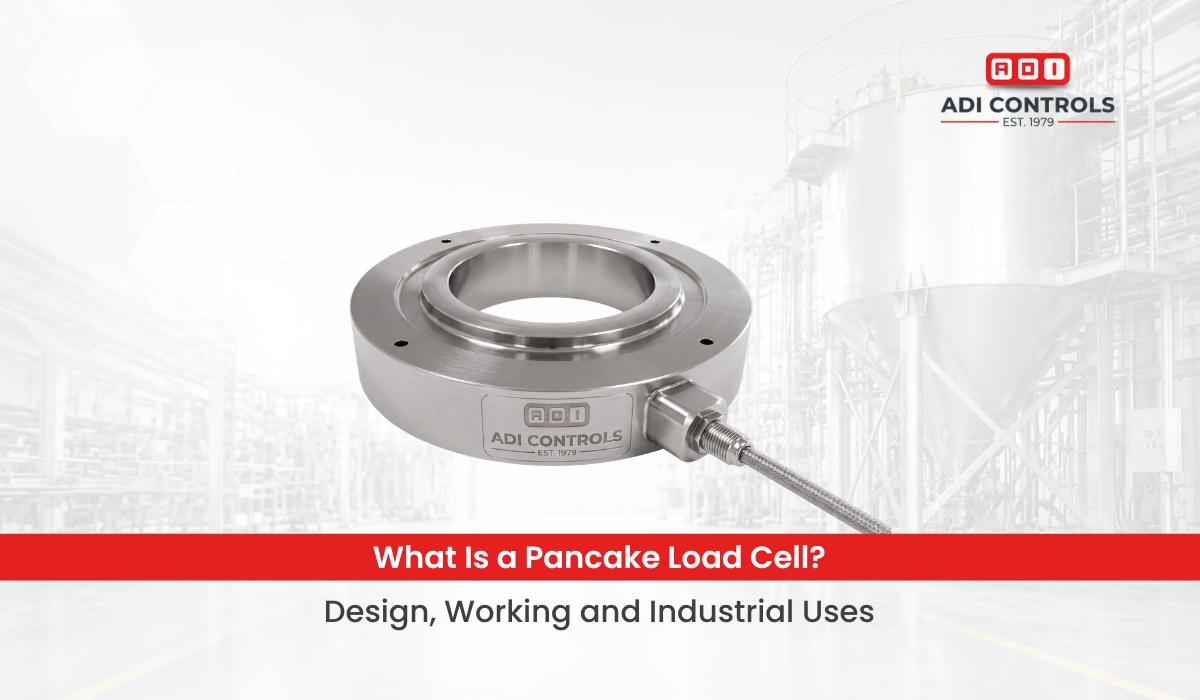
A pancake load cell is a compact force sensor used to measure compression or tension loads with high accuracy. It gets its name from its flat, disk like shape, which resembles a pancake. Because of this low profile, engineers use it in places where space is tight but precision still matters. This article looks at how a pancake type load cell is built, how it works, and where industries rely on it every day.
A pancake load cell belongs to the strain gauge family of sensors. Unlike bulky column or canister sensors, it is thin and round, so it fits directly into machine fixtures, test rigs and process equipment without adding extra height. This makes it a popular choice whenever engineers need a digital load cell that offers strong accuracy in a small footprint.
The body of a pancake load cell is usually machined from alloy steel or stainless steel. Strain gauges are bonded to the inner surface of the disk in a radial pattern. When force is applied to the flat top of the cell, the disk deflects by a very small amount. This tiny deformation creates strain that the gauges detect and convert into an electrical signal.
Most pancake load cells use a Wheatstone bridge circuit made up of four strain gauges. This arrangement cancels out temperature effects and improves stability. Many models also include a male and female thread on opposite faces, so the sensor can be mounted directly in line with a load path, such as inside a fixture, actuator, or test frame.
When a load pushes down on the sensor, the disk compresses slightly. The strain gauges bonded inside stretch or contract with this deformation, which changes their electrical resistance. The Wheatstone bridge converts this resistance change into a small voltage signal, usually measured in millivolts per volt of excitation.
This signal is weak on its own, so it passes through an amplifier before reaching a display, controller, or digital load cell indicator. Because the radial gauge layout responds mainly to loads applied straight through the center, pancake cells also resist small side loads and tilted forces better than many other designs. This makes readings more reliable even when mounting is not perfectly aligned.
Standard pancake load cells work well for many jobs, but some applications need special capacities, materials, or mounting patterns. A custom load cell can be built with a different thread size, a higher overload rating, or a coating that resists corrosion. Manufacturers often request custom designs for hazardous environments, cleanroom equipment, or machines with unusual space constraints.
Modern pancake sensors are frequently paired with digital electronics. A digital load cell setup converts the analog millivolt signal into a digital output early in the process, which reduces noise and simplifies wiring over long cable runs. This is especially useful in plants where sensors sit far from the control room.
Pancake load cells appear across many sectors because their thin profile suits equipment where every millimeter counts.
In chemical plants, space around reactors, mixers and tanks is often limited, and equipment must handle exposure to fumes, moisture and washdown cycles. A pancake type load cell fits into these compact spaces while still delivering repeatable force data. Sealed and stainless steel versions are common here since they resist corrosion and stand up to frequent cleaning.
Pancake load cells are also used in aerospace component testing, automotive crash and durability rigs, and universal testing machines that check the strength of materials. Their fast response and off axis rejection make them suitable for dynamic testing where loads change quickly. Robotics, packaging lines and structural load testing setups use them as well, since the low height allows integration directly into moving assemblies.
Picking the right pancake load cell depends on expected capacity, mounting space, environmental exposure and required accuracy class. For most standard weighing or force checks, an off the shelf sensor works fine. For unusual mounting geometry or harsh conditions, a custom load cell built to exact specifications delivers better long term reliability. Working with an experienced load cell manufacturer helps match the right design, output type and digital load cell compatibility to the application at hand.
Need accurate force measurement in a compact space?
ADI Controls helps you choose the right pancake load cell based on your load capacity, mounting space, accuracy needs, and application environment.
It measures compression force in tight spaces such as chemical reactors, test rigs and packaging machines. Its flat shape allows easy integration where height is limited.
A pancake load cell is thin and disk shaped, while a column load cell is taller and cylindrical. Pancake designs suit low clearance mounting, while column types handle very high capacities.
Yes. A custom load cell can be built with different thread sizes, capacities, materials or sealing to suit specific industrial needs.
Most models give a millivolt per volt analog signal, though many are now paired with a digital load cell converter for cleaner, long distance signal transmission.
Its radial strain gauge layout naturally reduces errors from small off axis or tilted forces, making it more forgiving than some other load cell types.
WhatsApp us