Force measurement is at the heart of safe industrial operations. Whether a crane lifts steel beams at a construction site or a winch pulls heavy loads on a ship deck, someone needs to know exactly how much force is being applied. That is where a load pin becomes essential.
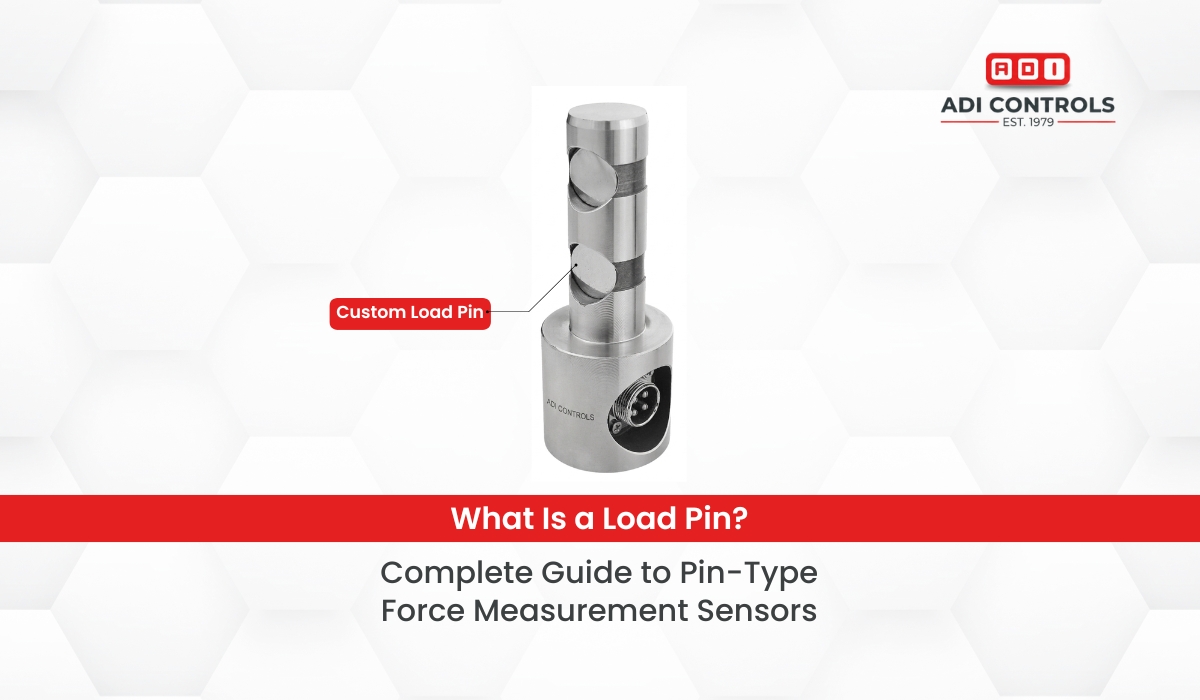
A load pin is a cylindrical force sensor that replaces an existing structural pin in machinery or equipment. It looks and functions just like a regular mechanical pin. But inside, it carries precision strain gauges that measure the shear forces acting on it.
Think of it as a smart pin. It fits directly into the original pin location of a crane, hoist, shackle, or winch. Once installed, it becomes part of the structure itself. There is no need to redesign the machine or add bulky external sensors.
Load pins are also called pin-type load cells or clevis pin sensors. They measure both tension and compression forces depending on how they are installed.
The working principle is based on strain gauge technology. When a force is applied to the pin, the internal material deforms slightly. The strain gauges bonded inside the pin detect this deformation and convert it into an electrical signal.
This signal is then processed by a signal conditioner or a digital load cell indicator to display the force in real time. Modern systems often connect to a digital load cell display or a PLC for continuous monitoring and data logging.
The output is typically an analog millivolt per volt signal. Some advanced models also offer digital output formats for direct integration with automation systems.
Load pins are widely used across industries where built-in force monitoring is critical.
Many people wonder how a load pin differs from a standard load cell. The main difference is in installation.
A traditional load cell is placed between the load and the structure. It requires dedicated mounting brackets and changes the existing setup. A load pin, on the other hand, simply replaces a pin that is already there. This makes it ideal for retrofitting existing equipment without any structural modification.
When connected to a digital load cell amplifier or indicator, both types deliver accurate real-time force data. But the load pin wins on compactness and ease of installation.
Choosing the right load pin involves a few key factors.
Modern load pins often pair with digital load cell systems for smarter data handling. A digital load cell converts the analog strain gauge signal into a digital format at the sensor level. This reduces signal noise over long cable runs and makes data transmission more reliable.
Industries that rely on real-time process monitoring, such as pharmaceutical plants, packaging lines, and material handling systems, benefit greatly from this combination.
Overloading is one of the most common causes of crane and hoist failures. A load pin acts as a constant safety watchdog. It alerts operators before the safe working load is exceeded.
In many countries, crane load monitoring is a regulatory requirement. Installing a calibrated load pin helps industries meet safety standards and avoid costly accidents.
Regular calibration of the load pin ensures long-term measurement accuracy. Most industrial load pins can be recalibrated without removal from the equipment.
A load pin is more than just a replacement pin. It is a precision force measurement tool that integrates seamlessly into existing machinery. From crane safety to agricultural hopper monitoring, it provides reliable data without disrupting the structure it protects.
Understanding the right type, capacity, and protection rating will help you choose the best pin-type force sensor for your application.
Need a precise and durable Load Pin for your application?
Connect with ADI Controls to find the right solution tailored to your needs.
It is used to measure force within mechanical joints, lifting systems, and structural connections.
A Load Pin replaces an existing pin and measures force directly, while a digital load cell is usually installed separately.
They are used in cranes, agricultural equipment, construction machinery, and material handling systems.
Yes, they are designed to perform in harsh environments, including dust, moisture, and varying temperatures.
Yes, they can be designed based on specific load capacity, size, and application needs.
WhatsApp us