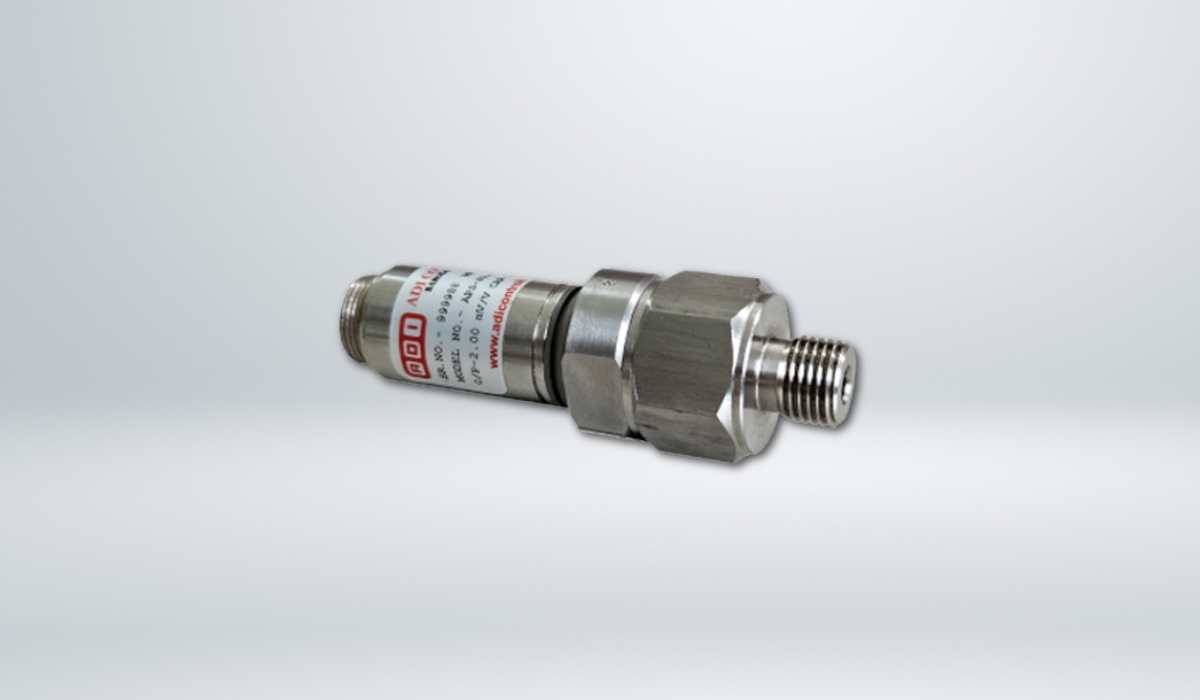
In the complex world of industrial automation, accurate pressure measurement stands as a critical requirement for ensuring operational safety, efficiency, and product quality. Pressure sensor, also known as pressure transducers, serve as the vigilant guardians that monitor fluid and gas pressures across countless applications. Understanding how these sophisticated devices function helps industries optimize their processes and maintain reliable operations.
A pressure sensor is a specialized device that converts mechanical pressure force into an electrical signal that can be measured, monitored, and analyzed by control systems. These sensors detect the force exerted by liquids or gases within pipes, tanks, vessels, and processing equipment, transforming this physical phenomenon into actionable data that drives industrial decision-making.
The fundamental principle of pressure measurement is that force acts upon a given area. Whether monitoring hydraulic systems, pneumatic lines, or process vessels, pressure sensors provide the real-time intelligence that prevents equipment damage, ensures safety compliance, and maintains optimal operating conditions.
Modern pressure sensors utilize advanced piezoresistive technology to achieve precise measurements. At the core of the sensor lies a pressure-sensitive diaphragm, typically fabricated from stainless steel or silicon, that flexes slightly in response to pressure changes. This diaphragm acts as the primary interface between the measured medium and the sensing electronics.
Embedded within or bonded to the diaphragm are specialized piezoresistive elements, microscopic resistors whose electrical resistance changes in response to mechanical stress. When pressure acts upon the diaphragm, it deforms minutely, altering the physical dimensions of these resistors. This dimensional change directly affects their electrical resistance through the piezoresistive effect.
The resistors connect in a Wheatstone bridge circuit, an elegant configuration that converts changes in resistance into stable voltage signals. This electrical output is then amplified and conditioned to produce industry-standard signals such as 4-20mA current loops or 0-10VDC voltage outputs. These standardized signals integrate seamlessly with programmable logic controllers, data acquisition systems, and human-machine interfaces.
Industrial applications demand different pressure measurement approaches depending on their specific requirements. Understanding these measurement types helps engineers select appropriate sensors for their applications.
Pressure sensors have become indispensable across diverse industrial sectors.
Choosing appropriate pressure sensors requires careful consideration of multiple factors. Pressure range is the first critical specification; the sensor must accommodate the full range of expected pressures while maintaining accuracy throughout. Oversizing or undersizing the pressure range compromises measurement precision.
Environmental conditions significantly influence sensor selection. Temperature extremes, corrosive media, vibration, and electromagnetic interference all challenge sensor performance. Industrial-grade pressure sensors feature robust construction with appropriate ingress protection ratings, typically IP65 or higher, ensuring reliable operation in demanding conditions.
Output signal type affects system integration. The 4-20mA current loop standard dominates industrial applications due to its excellent noise immunity over long cable runs. The 4 mA signal represents zero pressure, while 20 mA indicates full-scale pressure, with the live-zero design enabling easy detection of circuit faults. Voltage outputs like 0-10VDC offer simpler wiring but prove more susceptible to signal degradation over distance.
Accuracy specifications must align with application requirements. While some processes tolerate accuracy within one or two per cent of full scale, others demand precision better than 0.1%. Pharmaceutical manufacturing and laboratory testing often require higher accuracy than bulk material handling or general HVAC applications.
Proper installation ensures optimal pressure sensor performance and longevity. To achieve reliable and accurate measurements, the following aspects must be carefully addressed.
Pressure sensors are essential for safe, efficient, and reliable industrial operations. By converting mechanical pressure into accurate electrical signals, they support process control, safety monitoring, and performance optimization. As industries move toward greater automation and data-driven systems, pressure sensors remain critical in linking physical processes with digital control platforms.
For over 46 years, ADI Controls has been engineering precision measurement solutions that industries trust. Our pressure transducers deliver the accuracy, durability, and reliability your critical applications demand. From hydraulic systems to HVAC monitoring, pharmaceutical processing to automotive testing, our sensors perform flawlessly in the most challenging environments.
A pressure sensor measures liquid or gas pressure and converts it into an electrical signal for monitoring, control, and safety systems.
Gauge pressure sensors measure pressure relative to atmospheric pressure, while absolute pressure sensors measure pressure against a sealed vacuum reference.
A pressure sensor uses a diaphragm and piezoresistive elements that change electrical resistance when pressure is applied, producing a measurable output signal.
Pressure sensors are widely used in manufacturing, HVAC, automotive, hydraulic systems, chemical processing, and food production.
Calibration frequency depends on application criticality and regulations, ranging from quarterly checks to annual verification.
WhatsApp us