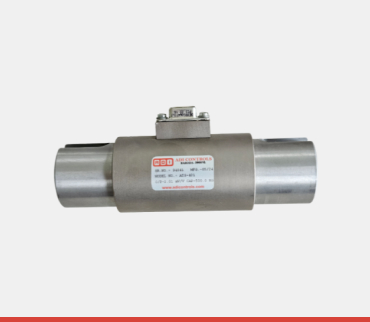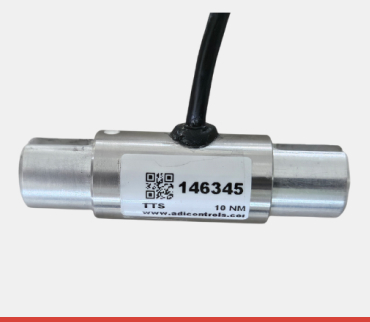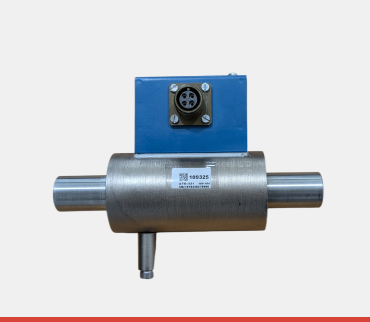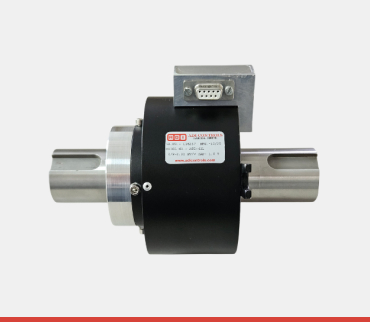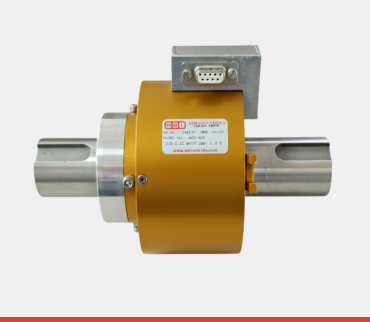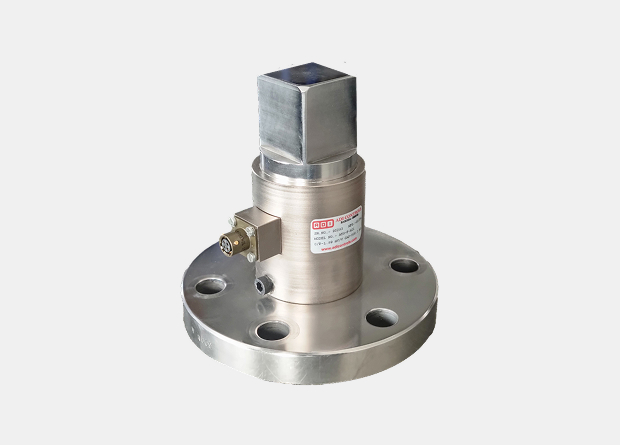
ADI ATS-422 A static torque transducer, also known as a reaction torque transducer, is a device used to measure the twisting force (torque) applied to a non-rotating or stationary object. Unlike a rotary or dynamic torque transducer, the static type is mounted to measure the reaction or restraining torque generated when an object is twisted against a fixed point, meaning no continuous rotation occurs during the measurement. The operation of a static torque transducer is based on the principle of converting a mechanical twist into an electrical signal, typically using strain gauge technology.
Product Type
Single Point Aluminium Load Cell
Usage
Table top scales, Counting and postal scales, Check weighers.
Material
Aluminium
Output
Analog Sensor
Theory
Resistance Sensor
Compensated Temperature
10 To 60 Celsius (oC)
Rated capacity (NM)
5, 10
Excitation Voltage
10 V DC – Maximum 15 V DC
Full Scale Output
2.0 mV / V
Non – Linearity
<± 0. 1 % FSO (Full scale Output)
Hysteresis
<± 0.1% FSO
Non-Repeatability
<± 0.1 % FS0
Creep error (30 minutes)
<± 0.3% FSO
Zero Output
± 1.0 % FSO
Input Resistance
392 ± 10 Ohms
Output Resistance
392 ± 10 Ohms
Insulation Resistance
>1000 Mega Ohms
Safe Overload
150 % of Rated Capacity
Ultimate Overload
250 % of Rated Capacity
Temperature
Compensated Range
10 to 60°C
Temperature Effect at Full Load
<0.05 % FSO/° C
Temperature Effect on
Zero
<0.05 % FSO/° C
Environment Protection
IP 65
Finish & Construction
Stain Less Steel 17-4 PH
Rotational Angular Deflection
< 0.2 at FSO
A torque transducer, often called a torque sensor or torque cell, is a device used to measure and convert a twisting force (torque) into a measurable electrical signal. It measures the rotational force applied to an object, typically in units like Newton-meters N.m
There are two primary types, distinguished by their method of transmitting the signal:
Most industrial torque transducers use strain gauge technology, similar to a load cell:
Torque transducers are essential for quality control and efficiency testing across numerous industries:
Since the raw output signal from the strain gauges is very small (a few millivolts), additional instrumentation is required:
WhatsApp us